Service to Man is Service to God
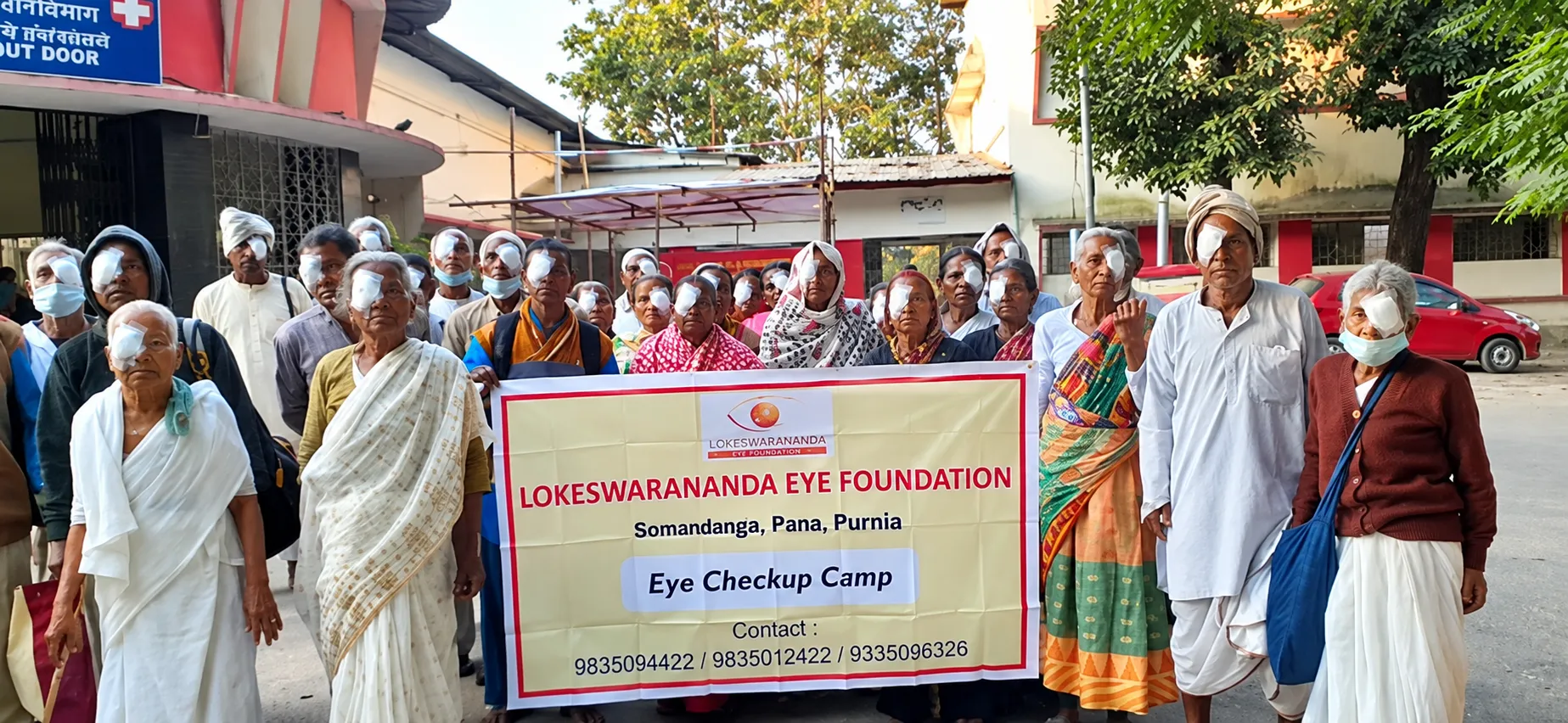
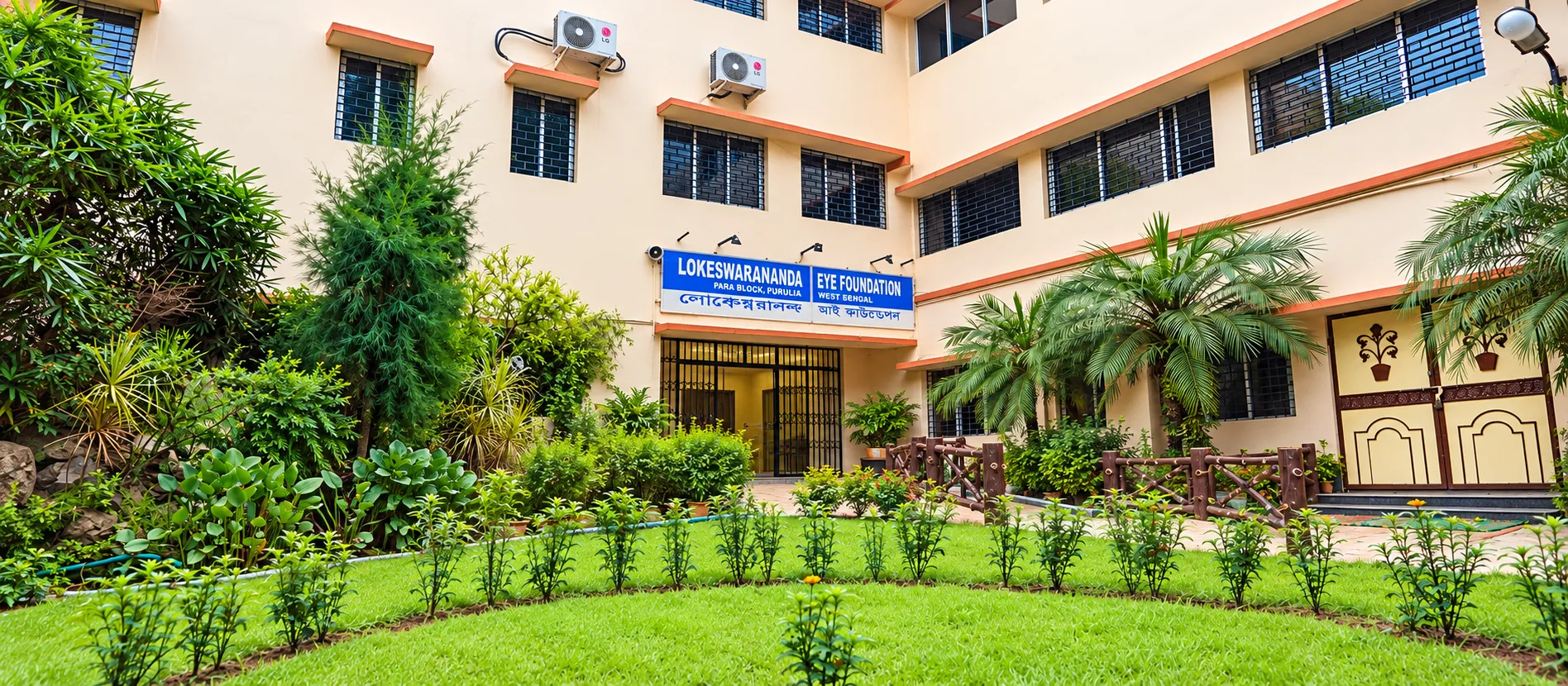
Lef Hospital, as an institution, is unwilling to compromise with the quality of the services we offer, irrespective of whether such services are meant for the rich or the poor. Explore our programmes below.
The Pandemic and the consequential global lockdown has been particularly harsh for the poor and the marginalised.
The needs are huge and our resources are meagre in comparison.
Till 23rd April 2020 we had been able to arrange packed rations (comprising rice, lentil, soyabean nuggets, oil, potatoes, special nutrition supplement “nutrimix” provided by CINI India and soap) for 2800 families in 10 blocks of Purulia district. These are:
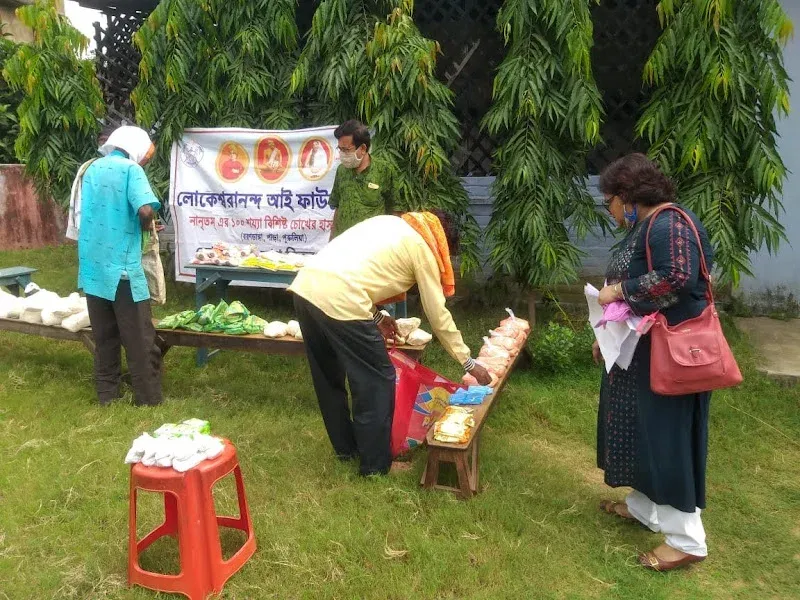
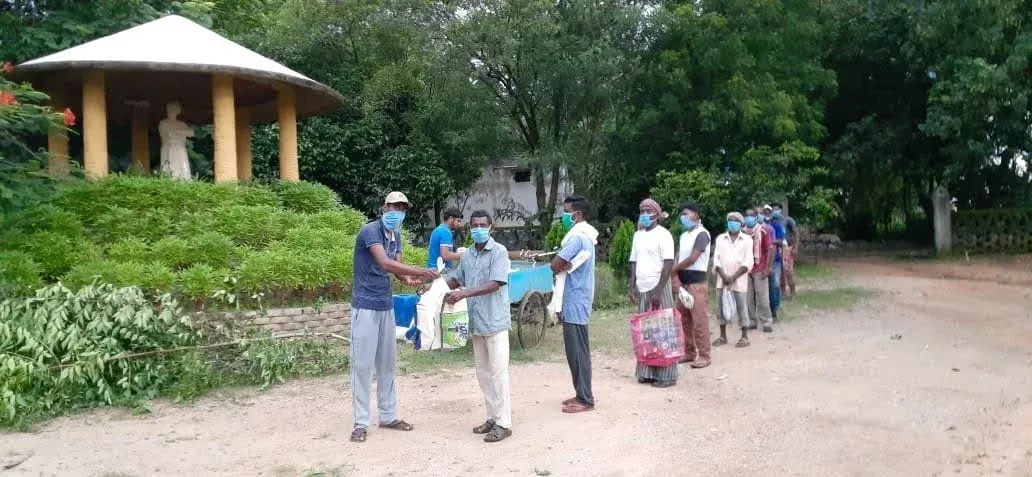
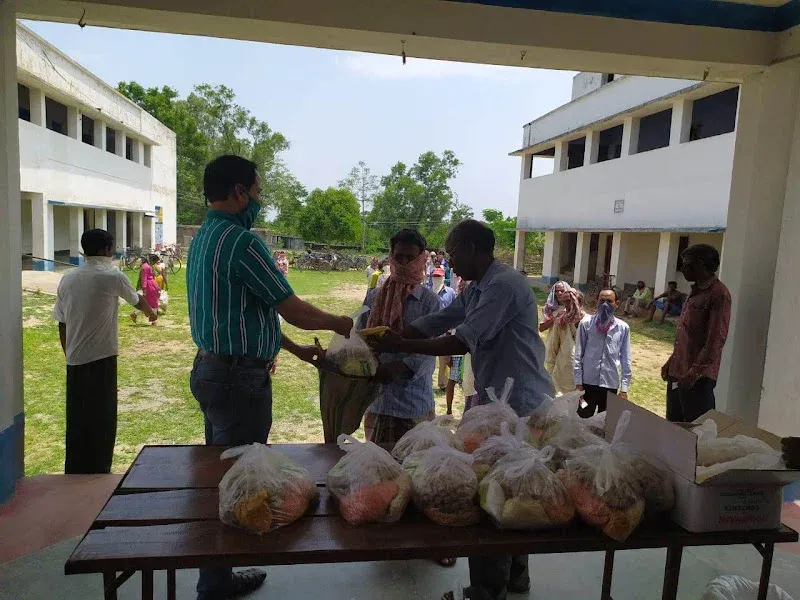
We have been supported by quite a few individuals and organizations. We would like to acknowledge our indebtedness to all of them.
Dr. Samir Chaudhuri of CINI Community Initiative has enriched our ration packs with adequate quantity of Special nutrition supplement for children and pregnant and lactating mothers.
Shree Vinayak Lohani of Parivar has also donated liberally for Nanritam’s relief programme.
All members of the Nanritam team residing in our campus at Barandanga, irrespective of their rank and status are sharing in this labour.
Senior doctors with high level of specialization, highly qualified teachers of our school, nurses and paramedics who keep our hospital running along with those who work in the campus’ kitchen and tend the garden and guard the gates… have joined hands together irrespective of their rank and status, to keep the relief operation running.
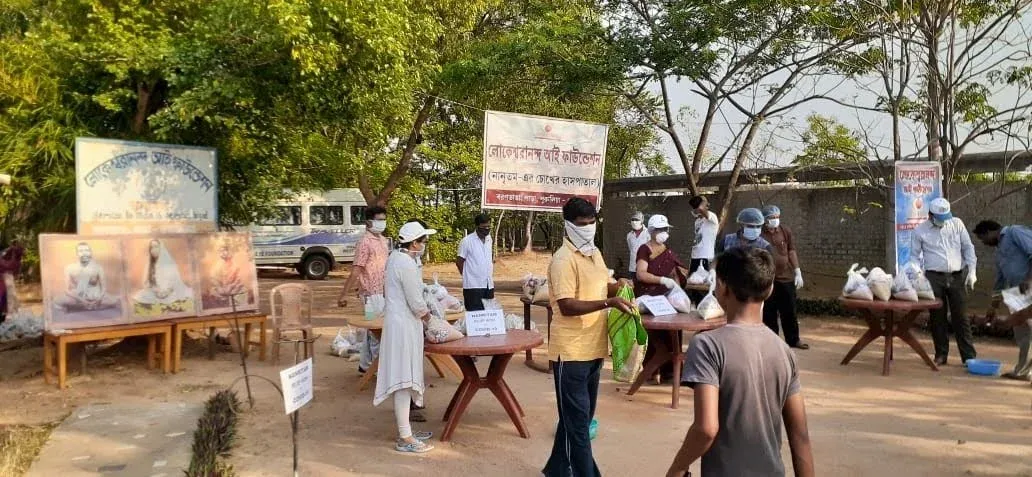
We are getting ready for our next phase relief work. We will reach out approx. 3500 families in this phase by Mother’s grace.
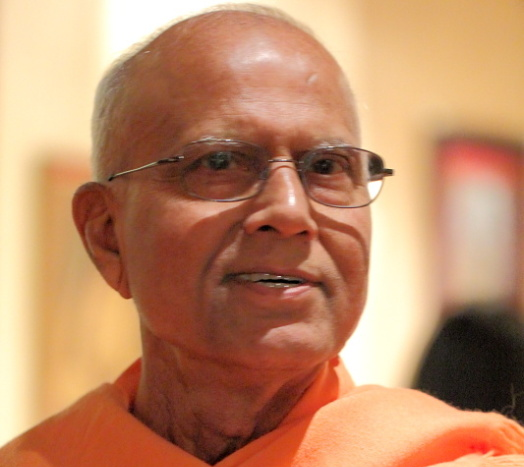
Swami Chetananandaji Maharaj, a monk of the Ramakrishna Order and currently the Minister of Vedanta Society of Kansas City and St. Louis, Missouri, who has also authored a large number of very popular books on Ramakrishna Vivekananda movement and ideology.
Swami Sarvadevanandaji Maharaj, the Minister and Spiritual Leader of the Vedanta Society of Southern California, of the Ramakrishna Order.
Swami Atmajnananandaji Maharaj (born Stuart Elkman), another monk of the Ramakrishna Order (who has a Ph.D. in oriental studies from the University of Pennsylvania) and is currently the resident Minister at the Vedanta Center of Greater Washington, DC, in Silver Spring, Maryland, USA.
Lef Hospital, as an institution, is unwilling to compromise with the quality of the services we offer, irrespective of the fact whether such services are meant for the rich or the poor.
Our resources are limited, and when we found that our instrument for retinal surgery was showing some signs of strain owing to the constant use it has been subjected to, and the resources available with us were inadequate for this kind of capital investment immediately, we went around with begging bowls seeking funds for procuring another such instrument.
The instrument was costly and the need was urgent. We sought funds from our friends and well wishers.
Fortunately for us, our friends include those who have renounced their own worldly interests to serve mankind. Swami Chetananandaji Maharaj, Swami Sarvadevanandaji Maharaj and Swami Atmajnananandaji Maharaj came forward to help the Hospital out.
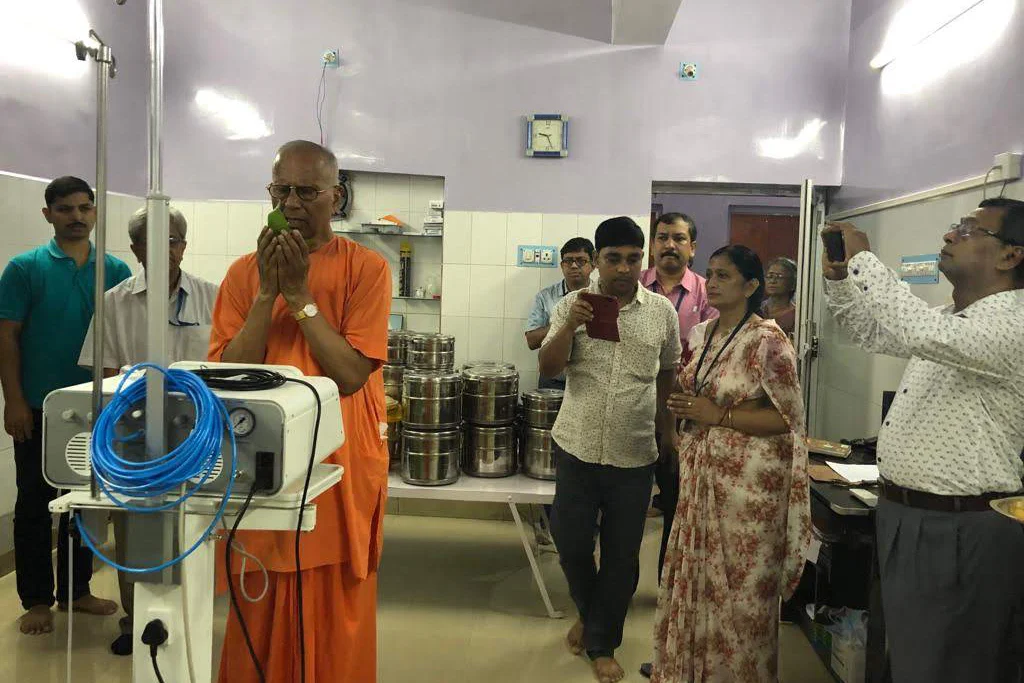
We could procure a Galaxy Turbo Orbit Vitrectomy machine with the funds raised by these monks for the Hospital.
We were fortunate that Swami Chetananandaji Maharaj was visiting our campus when the machine was installed, and he inaugurated and blessed it at our request.
We humbly acknowledge our gratitude to these Revered monks who have also been supporting the Filix School of Education with all kinds of resources for the past few years.
The European Society of Retina Specialists (EURETINA) was established in 1999 to promote the sharing of knowledge among European vitreoretinal and macula specialists. Their annual congresses are the highlight of the Society’s annual activity and since the 1st EURETINA Congress in 2001, participation has expanded rapidly from 211 to over 5,000 in recent years. EURETINA actively promotes new diagnostic developments, advances in vitreoretinal surgery, the development and application of new drugs, and changes in the treatment of macular degeneration. The Society is particularly committed to educating young vitreoretinal surgeons and encouraging the pursuit of its subspecialty among newly qualified ophthalmologists.
The 19th European Society of Retina Specialists Congress, EURETINA 2019 held in Paris, France between 05-08 September 2019 has brought special cheers to all of us at Nanritam and Lef Hospital as LEF Vice Chairman, Dr Rupak Kanti Biswas has been awarded the 1st Prize in this congress for his entry on “using an autologous retinal patch graft to close macular holes in cases where conventional methods such as ILM peeling or inverse flap technique have failed.”
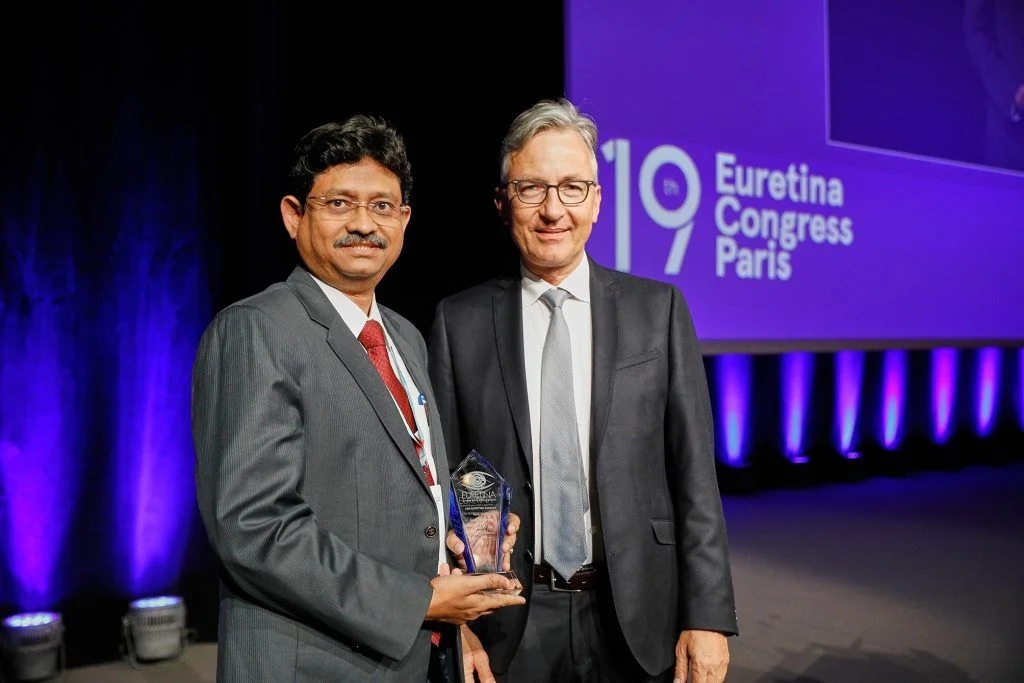
We reproduce below his achievement as reported in the newspaper Eurotimes on 6th September 2019.
“An innovative technique to close macular holes using a customised retinal graft and a new approach to treat the complete luxation of the crystalline lens while preserving the capsular bag were among some of the vitreoretinal surgical techniques showcased in the 2019 EURETINA Video Awards, with the very high standard of entries this year praised by Frank Holz, Incoming President of EURETINA.
First prize this year was awarded to Rupak Kanti Biswas MD of India for his entry on using an autologous retinal patch graft to close macular holes in cases where conventional methods such as ILM peeling or inverse flap technique have failed.
This year’s second prize was awarded to Fernando Gonzalez del Valle of Spain for his video “New vitreoretinal surgery to treat the complete luxation of the crystalline preserving the capsular bag”, while third prize went to Egor Arkhipov of Russia for “Multimodal approaches to the correction of post-traumatic eye changes”.
Dr Biswas’s prize-winning video entry presented an inventive approach to treating macular holes that had not been successfully closed using conventional surgical approaches. Rather than using autologous blood or lens capsular flap transplantation as a rescue strategy, Dr Biswas came up with the idea of plugging the macular hole with a customised patch of retinal tissue. Using a trephine that is 100 microns larger than the macular hole, Dr Biswas removes a patch of retinal tissue, which is then tucked into the hole using a soft-tipped cannula.
His hypothesis was that using a carefully sized patch of tissue would ensure end-to-end touch at the graft-host junction and facilitate neural regeneration. This was subsequently confirmed by multifocal ERG testing and automated perimetry assessment.
Dr Biswas has now performed seven cases using this technique with a minimal follow-up of one year and a maximum of 3.5 years.
“We have 70% of cases with the graft in place, the vision has improved in 40% of cases, and the rest of the patients had stable vision,” he said.
Dr Biswas noted that the key to success with this approach lies in harvesting the correct size of the retinal graft by trephination and not using any substance such as viscoelastic or perfluorocarbon which might hinder end to end touch.”